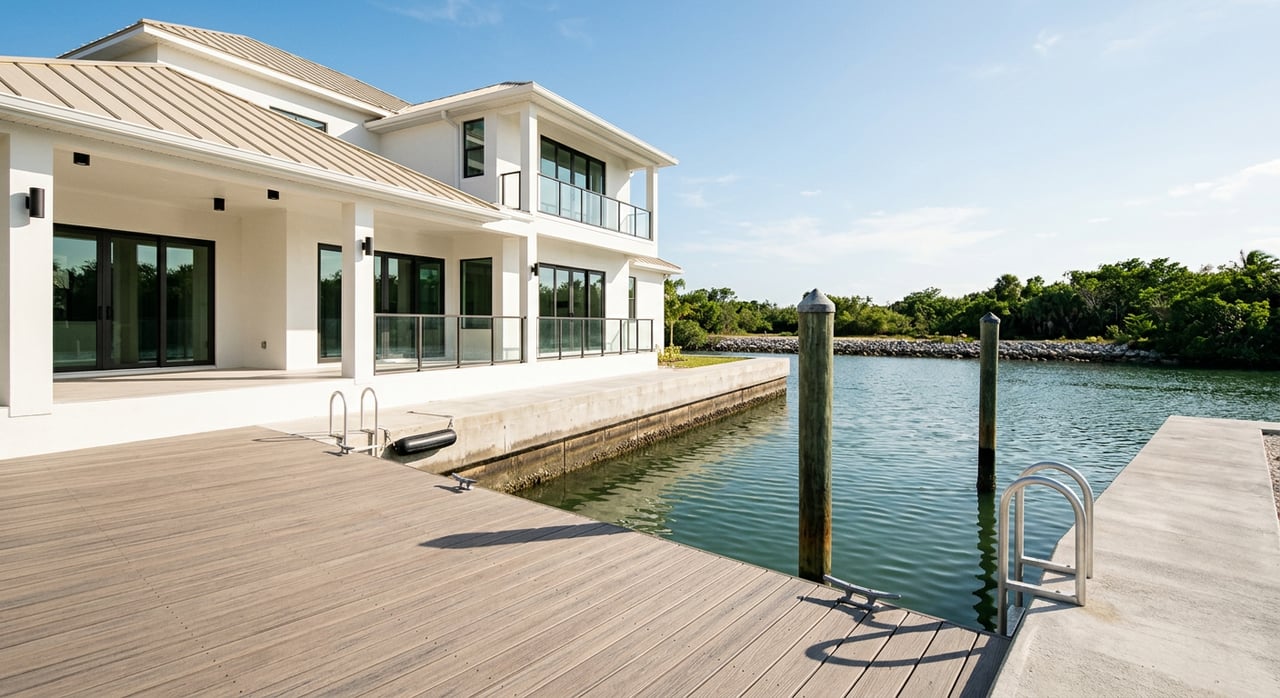
Bradenton Waterfront Homes For Boaters: What To Look For
March 5, 2026
March 5, 2026
You love the idea of stepping from your back door onto your boat, but not every waterfront home in Bradenton is truly boat ready. Two properties can look similar online yet differ a lot when it comes to depth, docks and the route to open water. If you plan to boat often, you need to evaluate the home and its marine access with equal care. This guide shows you what to look for, how to verify it and where to find local resources so your next move fits your boat and your lifestyle. Let’s dive in.
Bradenton sits on the Manatee River with quick access to sheltered waters like Anna Maria Sound, Sarasota Bay and Palma Sola Bay. From there, you can reach the Gulf through Tampa Bay or nearby passes. For larger vessels, proximity to maintained deep-water channels matters; the Manatee Harbor project near Port Manatee is a federally maintained approach that signals reliable deep access for commercial traffic and larger drafts (USACE Manatee Harbor overview).
Local tides are modest, often in the 1 to 3 foot range depending on the cycle, but you still need to compare your boat’s draft to low-tide depths. Use official tidal datums and predictions to plan transits and convert chart soundings to local clearances (NOAA Tides & Currents for Port Manatee).
Bayfront lots often provide wide views, big frontage and quick runs to sandbars and the Gulf. They can face stronger wind and wave exposure, especially on west-facing shorelines. Pay close attention to seagrass flats or protected shallows in front of the property and confirm the approach depth across the nearest channels. Area marinas reference NOAA Chart 11425 for navigation in these waters, a reminder that local approaches can run shallow in places (Bahia Mar West reference to Chart 11425).
Riverfront homes tend to offer good wind protection and easy downtown access. The river also has marked channels, occasional commercial traffic and areas that shoal, especially near mouths and creek confluences. Verify the local channel alignment and the exact depth from your dock to the marked route before you buy.
Subdivision canals can be perfect for everyday boating, but details matter. Canal width, depth at mean low water and turning basins often limit what size boat will work. Ask for measured soundings, not just MLS notes, and confirm you have enough room to turn and berth your boat safely based on LOA and beam.
On Anna Maria Island and Bradenton Beach, you get short runs to island marinas, sandbars and popular recreation areas. Private dock size, dredging history and tidal flats vary a lot by street and shoreline. For transient slips and island services, look to a full-service option like Bradenton Beach Marina.
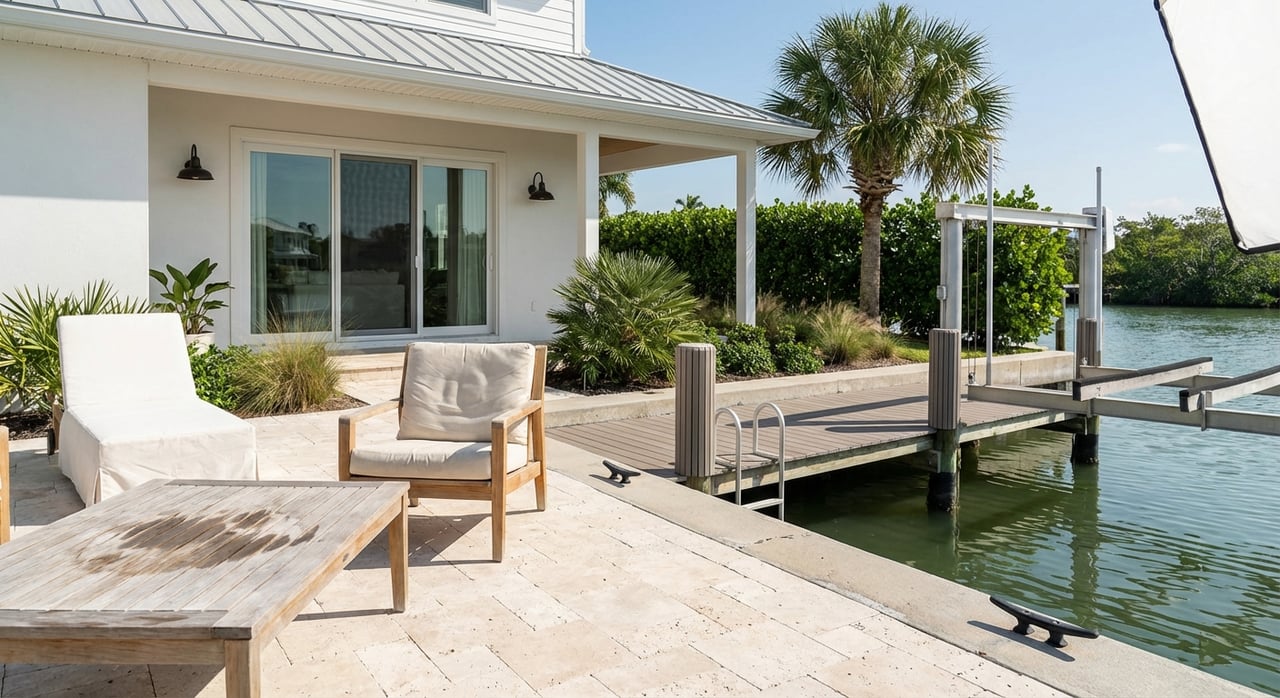
Start with the dock’s structure. Floating docks ride the tide and can be practical in shallow, muddy bottoms. Fixed pile docks are common where pilings reach firmer substrate. For lifts, confirm the rated capacity in pounds, the age, the manufacturer and whether the bunk spacing and height match your boat’s LOA, beam and hull. Measure usable slip length between structural elements, not just lot frontage. As a simple rule, plan for LOA plus 4 to 6 feet of approach room at a minimum.
Check shore power for the right amperage and voltage at the pedestal, plus GFCI protection and tidy, code-compliant wiring. Confirm potable water, dock lighting and how you will handle fuel and pump-out. Many local marinas list on-site pump-out and gas, which can simplify routine service runs (Bahia Mar West amenities).
Aging seawalls can drive near-term costs and insurance questions. Look for cracking, panel bowing, cap deterioration, corrosion near tie-backs and evidence of movement. If you plan changes, understand that seagrass and mangrove protections shape what is permitted along much of Florida’s Gulf Coast shorelines. Start early by reviewing habitat guidance and thinking through “living shoreline” options where appropriate (FWC habitat and seagrass guidance).
Depth is the critical metric. You need the measured depth at the berth and along the approach route referenced to MLLW, then a safety margin for under-keel clearance. Compare any seller-provided soundings with charted depths and local tide predictions to avoid surprises (NOAA Tides & Currents datum tables). Shoaling is common near inlets and creek mouths. Federal commercial channels like the approach to Port Manatee are maintained, but private canals are not and may require periodic dredging or assessments (USACE Manatee Harbor overview).
Identify every fixed bridge, drawbridge or overhead line between your dock and open water. Published vertical clearances are shown on official charts and in federal regulations. The CSX railroad drawbridge over the Manatee River is normally in the open position, but you should always confirm operations and clearances for your route, and verify clearances at the correct water level reference (MHW or MLLW) before committing (federal drawbridge rule reference).
You have strong backup options if a private dock is not a perfect fit on day one. For full-service storage, valet launches and technicians, look at Manatee River Marina. For gas, pump-out and public slips with a shallow approach typical of some local creeks, see Bahia Mar West. On the island side, Bradenton Beach Marina offers transient docking and services for day trips.
If you trailer or want alternate launch points, review Manatee County’s directory of public ramps around SR-64, Palma Sola Bay, Kingfish and Coquina. It is a helpful planning resource for weekend logistics and staging options (Manatee County paddle and boating page).
Choosing a Bradenton waterfront home as a boater is about more than a great view. With the right depth, dock and route, you gain everyday freedom on the water and long-term confidence in your investment. If you want a locally grounded walkthrough of your options, schedule your free, no-pressure consult with Janelle Miller to chart the best path to your perfect boat-friendly home.
Stay up to date on the latest real estate trends.
Experience white-glove service, unmatched local knowledge, and proven results for your next real estate transaction.
ADDRESS 1301 6TH AVE W STE 105 BRADENTON FL 34205